
Event planning professionals know the job comes with many kinds of “hard”: managing tight budgets with high expectations, guiding clients on what works versus what’s simply tradition, enforcing boundaries, and juggling a never-ending to-do list.
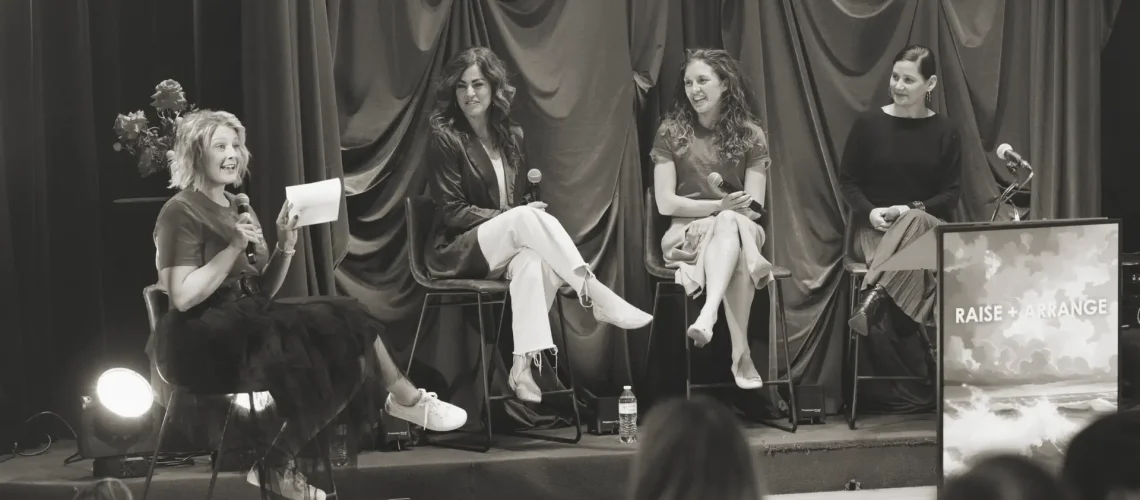
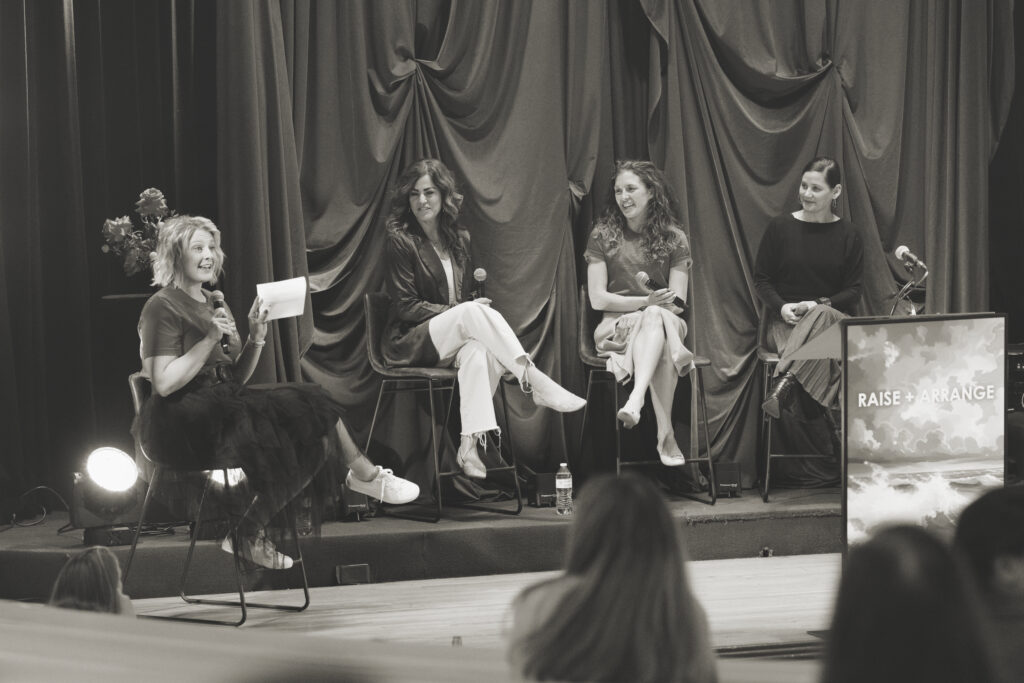
At this year’s RAISE + ARRANGE, industry professionals Kalsey Beach (Do Good Events), Dre Barthel (Covey), and Katrina Post (On Point Parties & Events) came together for the All Ships Rise panel to share their experiences—and honest advice—on handling the more challenging aspects of the job.
Here are some key takeaways from their conversation.
Story Telling on a Budget
Event planners—especially in the nonprofit space—often have to navigate high expectations alongside limited budgets.
Dre Barthel of Covey emphasizes the power of storytelling in events. While the return on investment can be significant, the ways you bring that story to life can vary widely in cost. For example, a testimonial can be delivered through a produced video or an in-person speaker. Video can be impactful if the budget allows, but with thoughtful preparation and strong speaker guidance, you can create equally compelling energy in the room without the added production expense.
Katrina Post of On Point Parties and Events recommends working with clients to identify the central thread that ties the event together and using it to shape the story—even when funding is primarily allocated to general operations. Carrying that narrative through pre-event marketing, the onsite experience, and post-event communications creates a cohesive experience, regardless of budget.
Tip: Choose one core message you want guests to walk away with, and build your event around elements that reinforce it.
Navigating Hard Conversations
Knowing how to navigate tough conversations with clients is essential. Kalsey Beach of Do Good Events shared an example of addressing a sensitive issue with a client about a raffle that had long been a tradition but had seen declining sales in recent years. Because people often feel deeply connected to the events they’re part of, these long-standing elements can carry strong emotional ties.
Approaching these discussions with empathy—while offering clear insights and thoughtful alternatives—helps shift the focus from “what we’ve always done” to “what will be most effective moving forward.”
Tip: Come prepared with data, examples, or alternative ideas, and frame the conversation around shared goals rather than just change.
Setting Boundaries
Event planning is a complicated world with a lot of gray areas, which means contract scope can easily blur and burnout can happen quickly. Post stressed the importance of drawing boundaries early in the planning process to ensure you don’t overextend yourself later on. Setting expectations up front makes it easier to stay aligned as the planning process evolves.
TIP: Outline scope and expectations clearly at the beginning and revisit them as needed throughout the planning process.
Learn from the Mistakes and Celebrate the Wins
In an industry where no two events are the same, mistakes and unexpected challenges are inevitable. What matters most is how you respond and move forward. Beach gave the advice to “Let go when you make a mistake. The sooner you let go, the faster you will show up better.”
“Let go when you make a mistake. The sooner you let go, the faster you will show up better.”
All three of these prolific planners also stressed the importance of taking care of yourself and preparing well for event days. “Celebrate the wins,” Beach shared, “especially the ones along the way!”
Post added the analogy that events are like babies: they take 9+ months to make, involve so many emotions, and are mentally, emotionally, and physically exhausting.
Taking time to acknowledge the milestones throughout the planning process helps sustain morale all the way through event day.
TIP: Build in both big and small moments to celebrate along the way. Examples are finalizing a key detail, securing a big sponsor, or completing a successful event.
Final Thoughts
The “hard” parts of event planning aren’t going away, but they are what make the work meaningful.
From navigating client conversations to building impactful experiences with limited resources, these challenges are opportunities to lead with creativity, empathy, and expertise.
Want more insights like these? Join us for our next RAISE + ARRANGE Conference to connect with non-profit event professionals and gain real-world strategies from industry leaders.